
 Visit UKSC
Lord Briggs confirmed as the next President of the Supreme Court of the United Kingdom
HM The King has approved the appointment of Lord Briggs as the next President of the Supreme Court.
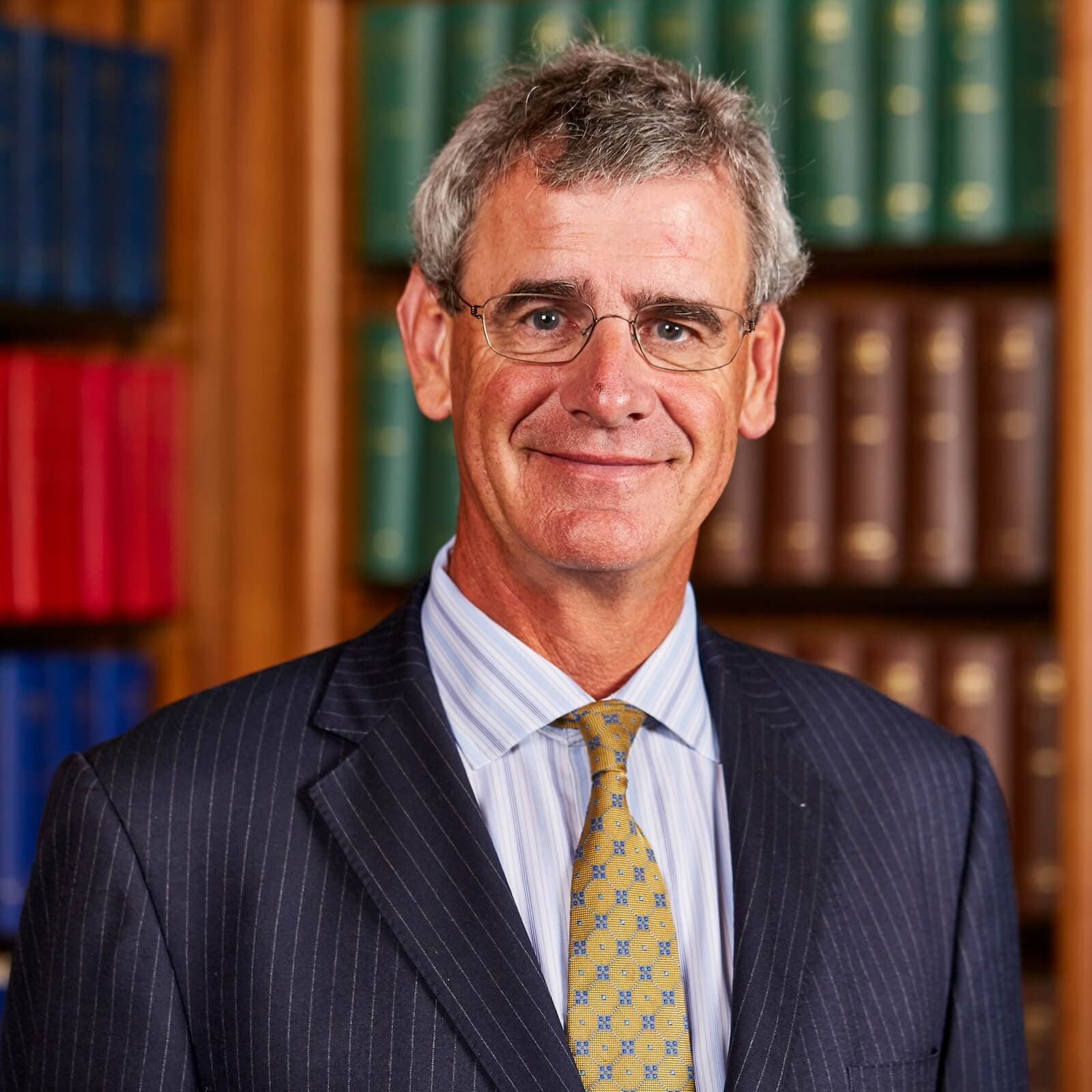
His Majesty The King has approved the appointment of Lord Briggs of Westbourne as the next President of the Supreme Court. The King made the appointment on the advice of the Prime Minister and Lord Chancellor, following the recommendation of an independent selection commission. Lord Briggs will take up his new role in January 2027, when the current President, Lord Reed, retires. Lord Briggs will be the Court's fifth President since it was established in 2009.
Speaking upon the announcement of his appointment, Lord Briggs said:
“It is a great privilege to be appointed President of the Supreme Court and to serve the public by upholding the rule of law. I look forward to working with colleagues across the Supreme Court and the Judicial Committee of the Privy Council (JCPC) to deliver justice of the highest quality, transparency and accessibility.”
The current President, Lord Reed of Allermuir, welcomed Lord Briggs’ appointment:
"I am very pleased that Lord Briggs has been appointed to be the next President of the Supreme Court. He is a judge of the highest distinction, with previous experience of judicial leadership. He has also demonstrated his commitment to increasing the accessibility and efficiency of the Justice system, both in domestic cases and in those heard by the Judicial Committee of the Privy Council. I wish him well in his new role."
Michael Townley Featherstone Briggs grew up around Portsmouth and Plymouth, following his naval officer father between ships, before spending his later childhood in Emsworth in Hampshire. He read History at Magdalen College, Oxford. A keen sailor, singer and the first lawyer in his family, he practised in Lincoln’s Inn from the chambers of Charles Sparrow QC which later became Serle Court, specialising in business and property litigation. He took silk in 1994. He served as chair of the Bar Council’s Law Reform Committee and, from 2001 to 2006, as Attorney General to the Duchy of Lancaster, before being appointed to the High Court in 2006. He was the judge in charge of the extensive Lehman insolvency litigation from 2009 to 2013. From 2011 to 2013 he served as Vice Chancellor of the County Palatine of Lancaster, performing the role of chancery liaison judge for the Northern and North-Eastern Circuits.
Lord Briggs was appointed as a Lord Justice of Appeal in 2013. He was the judge in charge of the Chancery Modernisation Review in 2013 and led the Civil Courts Structure Review in 2015 to 2016, which recommended the establishment of an online civil court. In January 2016 he was appointed Deputy Head of Civil Justice, and in that capacity served as the de facto head of the Civil Procedure Rules Committee.
Lord Briggs was appointed as a Justice of the Supreme Court in 2017. During his time in the Court he has been engaged in a range of judicial work, but particularly a series of cases about the role of equity and fiduciary duty in our common law. From 2022 he has also had delegated responsibility for the practice and procedure of the Judicial Committee of the Privy Council. He has maintained a keen interest in modernising Court procedures and increasing the transparency of the Court’s work, most recently exploring the careful adoption of artificial intelligence in its administrative processes.
Away from the Court, Lord Briggs is married to Beverly Ann Rogers, a commercial mediator, and they have four children. He is an Honorary Fellow of Goodenough College in London.
His other interests include classic wooden yacht racing and cruising (he is Vice Commodore of the British Classic Yacht Club) and choral singing (he is a trustee of the Sixteen Choir led by Harry Christophers, with whom he sang as an undergraduate choral scholar at Magdalen, Oxford).
The role of the President
The Court sits as the final Court of Appeal for civil cases in England and Wales, Scotland and Northern Ireland and for criminal appeals in England and Wales and Northern Ireland and exercises the devolution jurisdiction formerly exercised by the JCPC. Justices of the Supreme Court also sit in the JCPC which forms the final Court of Appeal for a number of Commonwealth countries, Crown Dependencies and Overseas Territories.
The President of the Supreme Court is the United Kingdom’s most senior judge, with responsibility for the Supreme Court and the Judicial Committee of the Privy Council as they determine complex and high-profile appeals of significance across the UK and beyond.
Alongside presiding over appeals, the President has a range of statutory functions and responsibilities. He provides leadership to the Justices and the Court’s administration, working closely with the CEO and the Deputy President. He represents the Court in its external relationships nationally and internationally, including relations with governments, Parliament, other apex courts, and the media.
More information on the judicial appointment process can be found here.